
- Register
- ☰
From the Training:
Safe & Loved School Vulnerability Assessments and Safety Plans
When I was a young man in the Marine Corps, I was scheduled for a formal audit of my training files and education records.
It was 1988, and at the time, it felt like a make-or-break moment. The pressure was enormous. In those days, one mistake—even a small one—could cost you your entire career. And I loved the Marine Corps. I wanted to stay forever. This wasn’t just a job to me. It was my identity, my future, and my family.
I was afraid.
Especially when I heard that a top-ranking enlisted Marine—a man who had been in uniform longer than I’d been alive—was coming to conduct the audit. I braced myself for the worst. I imagined him walking in, barking orders, demanding to see my files, and combing through every page looking for anything and everything I’d done wrong.
But that’s not what happened.
On the first day, he walked into my office, sat down across from me, and we just talked—for eight hours. He didn’t touch a file. He didn’t ask to see a single binder. He simply talked to me about the kind of man a training NCO should be. What he should believe.
He asked me questions about how I saw my role. What made a good Marine and a good leader. I told him. He never once corrected me or dismissed me. Instead, he listened to everything I said and then built on it by adding wisdom to fill in the gaps where I fell short.
That day changed me.
In the Marine Corps, that kind of interaction was not required. He didn’t have to ask me anything. He had every right to walk in, tell me to lay out all my materials, and pick apart every mistake. That would’ve been standard. Expected. And maybe deserved.
But he did something better.
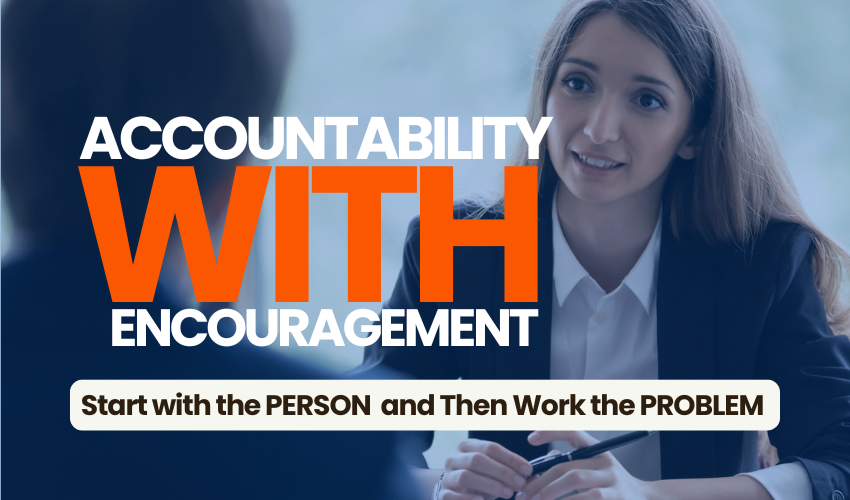
He showed me that accountability and encouragement are not opposites.
You can have both and be better for it.
On the second day, I laid out every binder, every note, every training plan I had. He went through them all. Methodically, expertly, and with a discerning eye. He found issues I had never seen. He pointed out things I had completely missed. But not once did I feel scolded. Not once did I feel diminished.
Instead, I felt like a valued member of the team. Respected. Motivated to improve.
That experience made me better and not just in that moment, but for decades to come. Because the way he treated me is the way I now treat others. When I walk into schools to conduct assessments, I carry his example with me.
One of my favorite reviews I’ve ever received came from a principal named Molly in upstate New York. She said, "I learned a lot from Don. I liked him immediately. He has a great way of explaining things to you so that you don't feel like you've been doing things the wrong way. The outcome has been that my school is safer. There also exists an even better positive climate. I didn't think that was possible—but I was wrong!"
That may not sound flashy or dramatic, but to me, it means everything. Because it means I became the man that Marine encouraged me to be. His legacy lives on in every school I walk into, in every principal I meet, in every conversation I have with a leader trying to do right by their staff and students.
So, what’s the lesson here?
If you’re in a position of leadership, then you are in a position of forced accountability. Upholding standards is more than just your job. It’s your obligation.
But how you carry out that obligation? That’s up to you.
You can choose to start with fear, pressure, and blame. Or, like that Marine, you can choose to start with conversation, respect, and wisdom.
Why not sit down first?
Why not talk about what matters most?
Why not explore the kind of people we want to be—and the kind of culture we want to build—before we dig into what’s wrong?
The accountability will still come.
But the way you enforce it can either build walls…or build people.
And people matter more.
That’s what I learned all those years ago, and I’ve never forgotten it.
People are the prize. And they should be treated that way.
That moment in 1988 didn’t just make me a better Marine—it changed how I see the partnership between accountability and encouragement.
And every school I step into benefits from that mindset instilled in me by that Marine.
Because now when I conduct an assessment, I don’t start with what’s wrong. I start the same way he did—with a conversation, with respect, and with the belief that the person in front of me is worth encouraging regardless of what still needs to be improved.
We still do the assessment.
We still correct what needs to be corrected.
But we don’t tear people down to get there.
That day could have been one of the worst days of my career.
Instead, it became one of the most important.
So if you lead others, remember to start with the person first and then work the problem second. But above all never forget that the goal isn’t just to fix the problem or hold someone accountable.
It’s to leave the person better than you found them.

Join the Safe & Loved Community and get more tips!
3 Options that will Change Your School

Address
PO BOX 474 Radford, VA 24143
Phone and text
(540) 577-7200
info@donshomette.com
Copyright © 2019 Don Shomette