
- Register
- ☰
From the Training:
Certified Safe & Loved Practitioner
My girls love horses.
They spend all of their time helping at an equine rescue with over 70 horses.
Horses are remarkable animals. Nothing but one giant muscle. Unbelievably powerful. If they weren’t so skittish, they could take over the world.
It’s weird.
A floating Walmart bag, a rustling brush, or a tiny furry rabbit may cause them to spook.
One day, I watched this happen and the rider get bucked.
This young fella went flying through the air and landed on his bum. The horse took off and had to be caught. But as soon as he was, they immediately dragged him back to the rider with a sense of urgency that surprised me.
The rider, sore bum and all, jumped right back up in the saddle.
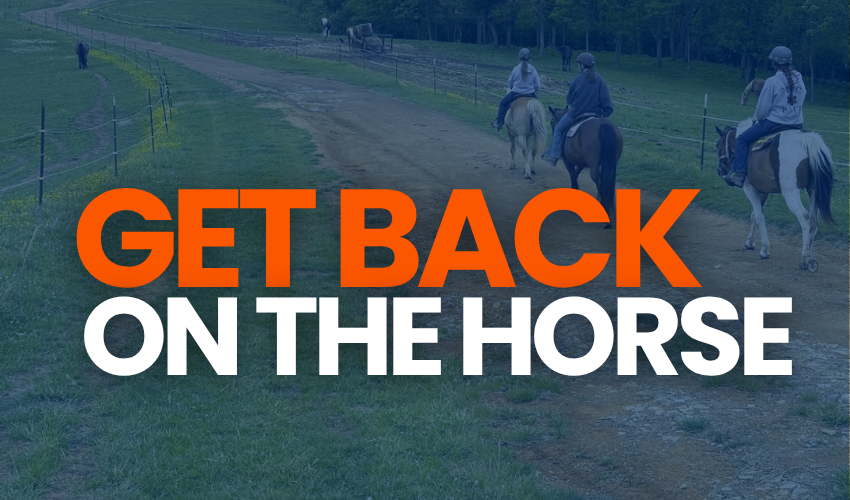
I know everyone has heard the phrase, “When you fall off a horse, get back on.”
Most of us understand what that means.
You get back on so you don’t become afraid of the horse. In doing so, the rider learns not to let one bad experience keep you from riding again.
But that day I learned there’s another reason you get back on the horse.
The horse is learning too.
If a horse throws you off and you don’t get back on, the horse is learning that if I don’t want to do this, all I have to do is throw the rider off.
That’s not safe for the rider.
That’s why everyone moved so quickly to get the rider back in the saddle.
There’s an important school safety lesson in that.
When a student makes a threat, we obviously have to address it because we want to prevent violence. We need to determine what happened, why it happened, risk level, and how we need to intervene.
But that student isn’t the only person learning from our response.
Everyone else is watching too.
Teachers are watching.
Students are watching.
Parents are watching.
And whether we realize it or not, they are learning.
If a teacher reports a threat and nothing appears to happen, they may learn that reporting doesn’t matter. If a student tells an adult something concerning and nothing appears to happen, they may learn that telling an adult doesn’t help. If parents hear about a threat and see no discernible response, they may learn that the school doesn’t take these things seriously.
Now, none of those things may actually be true.
The school may do everything exactly right.
But people respond to what they experience and they learn from our response.
When concerning behavior is consistently noticed, reported, and addressed, people begin to understand something about the environment they are in.
Around here, we take concerns seriously.
Around here, when you tell us something, we do something.
That sends an important message to someone considering doing something wrong. But the message it sends to everyone else may be even more important.
You can trust us.
Because we're going to take it seriously.
That doesn't mean everyone needs to know what consequence a student received. It doesn't mean publicly discussing private information. And it certainly doesn't mean every situation receives the same consequence.
The response should fit the situation.
But there must be a response.
Because every time something concerning happens, people are learning from what we do next.
Just like the rider.
Just like the horse.
And what they learn will make us safer or less safe.

Join the Safe & Loved Community and get more tips!
3 Options that will Change Your School

Address
PO BOX 474 Radford, VA 24143
Phone and text
(540) 577-7200
info@donshomette.com
Copyright © 2019 Don Shomette